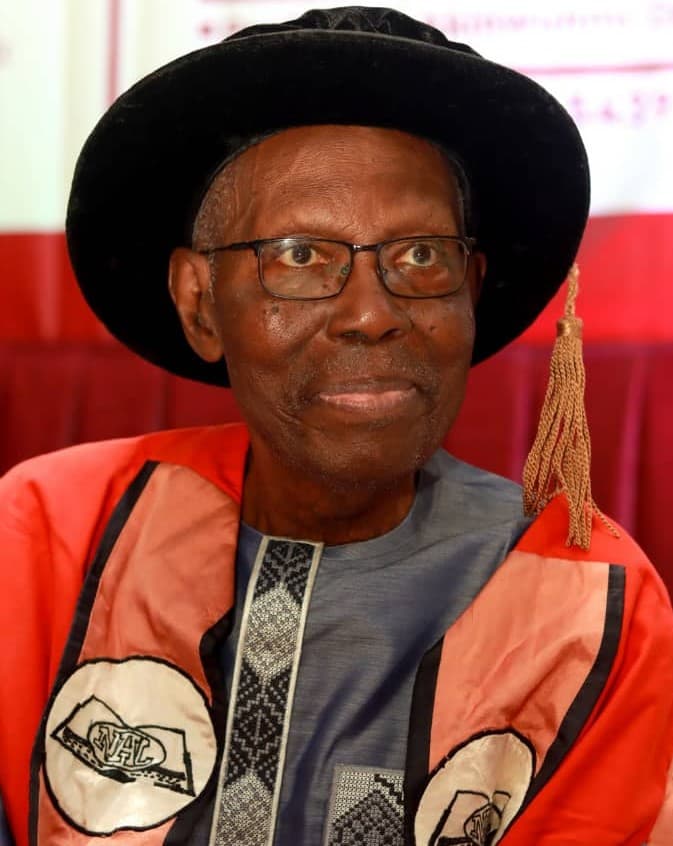
ỌO
Ọlásopé O Oyèláràn
Colleague
3w ago
Amòye Ọ̀jọ̀gbọ́n Ayọ̀ Bámgbóṣé
O ṣeun o
Ayé mọ̀ pé o tún òun ṣe
Ìgbà tí mo kí ọ ìyèdún àádọ́rùún ọdún láàyè ní ìdunta, mo sà ẹ́ déle pé:
Ayọ̀, o bá Baba jórúkọ kí èké ṣíwọ́ mèhurumèhuru:
Ọmọ Bámgbóṣé Ọ̀rọ́bìtìkó
Awólurúnmọlẹ̀ bí ẹ̀bìtì
Ó forí onígbèsè yẹ́èmọ́ kítíkítí
Ọmọ Ògbódo Ládùwá
Ọmọ ọkọ ará Ìdọ́wá
Ọmọ Ọba Dàgbúrèwé
Ọmọ kárí-kárà, kárà-ká-máà-sọn
Ọmọ atà-máà-tàwìn, arà-máà-sọn
Ọmọ afàìlówó-ńlé-polóri
Ọmọ afàìládìyẹ-ńlé-palágò
Kò rúrun dèkèé mọ́
Ọmọ atòdòdó-ra-Fúlàní
Ọmọ ògbóbìnrin-tà-ra-tọ́n-ọ́nmọ́
Tọ́n-ọ́nmọ́ gbeni, obìrin ò gbeni.
O ṣeun o, Ayọ̀rìndé, àrólé Sàngódípẹ̀ Bámgbósé. Ní ìdunta tí mo yá láara orílẹ̀ rẹ sà ẹ́ bá yìí, mo tún mú lára oríkì Babańlá tèmi láti kí ẹ ní
Kùrukùru Àjànàkú
O fòkè ṣe!
Ti gànnàkù kọ́ ni agùntaṣọọ́lò ọmọ Bámbósé ṣe fi “kùrukùru jọ òkè, tí ó fi ìkàlẹ̀ rẹ̀ lásán jẹ́ kí àwọn ènì˚yàn ní ẹ̀gbẹ́ rẹ̀ rí bí ẹ̀lírí, bí èèrà yí ï ká. Ó lóhun tó fi ta ẹgbẹ̀gbúwà ẹ̀dá yòókù yọ. Baba fi ìwà àti iṣe ta ará yòókù yọ: bí ká wòye, ká fi ojúunú àti àrògún ṣe oògùn àyà níní dá ara rẹ̀ lójú, ó fi ìyẹn tayọ àwọn ojúgbà rẹ̀, láti lénjélénjé ọmọ oru˚̀kàn. Ayọrìndé ki ara rẹ̀ ní “à-tàpáta-ǹde:” ò yẹ kí ó yéni pé ìtorí ó ti kùtù ayé fi àrògún, àròjinlẹ mú àìleèṣe kúrò lọ́ràn ara rẹ̀ ni. Ìdí nì yẹn tí kò fi le yé àwọn tí wọn rò pé àwọn mọ Ayọ̀ Bámgbósé, ṣùgbọ́n tí kò fi yé wọn tí kì í fi ṣe a-dá-máà-le-è-ṣe, tí ó bá kàndí pé òun ò le ṣíwọ lásán kúrò níbi tí òun ti fi ìka tẹ̀ kọrí sí.
Ayọ̀rìndé ọmọ Bámgbóṣé fi orúkọ bá Ṣàngó tan, ṣùgbọn ó fi làa˚́kàyè, ojúunú àti àtinúdá tí Ògún fi í tún ayé rọ sọ ara yòókù dọbùn.
Ògún Ayọ̀rìndé Bámgboṣé lagbó, lajù ìmọ̀ ẹ̀dá-èdè to fi jẹ́ kí àwọn tí ó ń kọ́ àti àwọn akẹgbẹ́ rẹ̀ ní ìdí ìmọ-èdè, lítíréṣọ̀, ìkọnilédè àti ìfèdèkọ́ni fi mọ aagba yàtọ̀ si kasan, ìjọ̀kùn yàtọ̀ sí wèrèpè, ẹ̀ẹ̀kan yàtọ̀ sí bẹẹrẹ, èrùwà yàtò sí èsúnsún. Àwọn ti Ayọ Bámgboṣé lagbó, lajù, lànà fún ni wọn da òògun máàkú láíláí fún ogún ìmọ̀-èdè tó fi sílẹ̀ nílé, lóko, ní Nàìjíríà, jákèjádò ilẹ̀ Afríkà, tó fi mọ́ òkè-òkun Amẹ́ríkà, ní Bàsíì, Kánádà, Jàpọ́n, Ṣáínà, láìyọ Erékùṣù Kúbà sílẹ̀.
Bí mo sì ti là fún ayé gbọ́ ní ìdunta,
Amòye Ọ̀jọ̀gbọ́n Ayọ̀ Bámgbóṣé ló sọ Ẹ̀ka-Ẹ̀kọ́ Ìmọ̀-Èdè ní Yunifásitì Ìbàdàn dòun, nígbà tí kò dájú pé irú rẹ̀ tí ì dáyé ní Orílẹ̀ Áfíríkà. Òun àti àwọn ọ̀gbà rẹ̀ nídìí ìmọ̀-èdè ni wọn dà Àjọ Onímọ̀-èdè Ìwọ̀-oòrùn Áfíríkà (THE WEST AFRICAN LINGUISTIC SOCIETY (WALS) / Société de Linguistique de l’Afrique Orientale(SLAO)) sílẹ̀ ní 1965. Amòye Ọ̀jọ̀gbọ́n Ayọ̀ Bámgbóṣé jẹ́ ọ̀kan nínú àwọn ògbóǹtagi onímọ̀-èdè tí wọn fi àṣẹ Àjùnmọ̀ṣe Ìṣọ̀kan Orílẹ̀ Áfíríkà (OAU) dá Akádẹmì Èdè Áfíríkà (ACALAN [AkaDáÉdèAfrikà]) sílẹ̀. Òun ló sì da òǹdarí Ìgbìmọ̀ Onímọ̀ fún Akádẹmì yìì láti 2009, kí ó tó ó fi í lé ẹlòmìíràn lọ́wọ́.
Ọ̀jọ̀gbọ́n Ayọ̀ Bámgbóṣé kúkú mọ̀ pé ilé la ti í kẹ́sọ̀ọ́ ròde; kó tó o bẹ́ síta bá a ṣe ń tò ó bọ̀ yii, ó ti kún àwọn ọ̀gbà rẹ̀ bí Olóyè Isaac Délànọ̀, Babaàsàlẹ̀ Adébóyè Babalọlá, Ọ̀jọ̀gbọ́n Afọlábí Ọlábíntán, Olóyè Olúdáre Ọlájubù, Ọ̀jọ̀gbọ́n Ọládélé Awobuluyì láti dá Ẹgbẹ́ Onímọ̀-ède Yorùbá sílẹ̀. Kò sì fi mọ ní Yorùbá, òun ni agbódegbà tí Àjọ ọnímọ̀-èdè Nàìjíríà náà fi dáyé.
Ọ̀jọ̀gbọ́n Ayọ̀ Bámgbóṣé kò sì káwọ́gbera lẹ́yìn tí ọ̀kọ̀ọ̀kan nínú àwọn àjọ onímọ̀ tó ṣe ọlọkọ̀ọ́ àtiwáyé wọn wọ̀nyí ti fẹsẹ̀múlẹ̀, pé alágẹmọ òun ti bí ọmọ rẹ̀, àìmọ̀ọ́jó dọwọ́ ọmọ. Bí àpẹrẹ, òun ló ti Ẹgbẹ́ Onímọ̀-èdè Yorùbá tí wọn fi jókòó bẹ̀rẹ̀sí í ṣe aáyan Èdè-ìperí, tó da àwòkọ́ṣe fún àwọn èdè Orílẹ̀ Nàìjíríà yòókù. Kò sì sí nkan mìíràn ju kí àtinúdá, lọríṣiríṣi ọ̀nà, máà ba à da “ọ̀rọ̀ hùnhùn inú ẹlẹ́dẹ̀” fún àwa Yorùbá lọ.
Bí Ọ̀jọ̀gbọ́n Ayọ̀ Bámgbóṣé ti ń lọ́ igi, tí àwọn igi náà ń da àràbà, dìtí, tí teku tẹyẹ, tàdán tòòbẹ̀ ń sá sí láti dábírà, bẹ́ẹ̀ ni o kó àwọn afọ̀na-ìmọ̀-hanni mọ́ra láti orílẹ̀-èdè yòówù kí ó ti rí wọn bọ̀dí ní Ẹ̀ka-ẹ̀kọ́ tirẹ̀; àwọn bí R.G. Armstrong (láti Amẹ́ríkà), Kay Williamson (Ilẹ̀ Gẹ̀ẹ́sì), tí wọn jọ kọ́ àwọn tí Ọ̀jọ̀gbọ́n Ayọ̀ Bámgbóṣé gbé ogún ìmọ̀-èdè àti lítíréṣọ̀ Yorùbà lé lọ́wọ́. Ara àwọn tí wọn gbà lọ́wọ́ àwọn tí Ọ̀jọ̀gbọ́n Ayọ̀ Bámgbóṣé kó bọ̀dí ni Airen Amayo, Afọlábí Ọlábọ̀dé, Akinwùmí Oròjídé Ìṣọ̀lá, Ọlátúndé Ọláìítán Ọlátúnji, àti Ọlábíyìí Babalọlá Yaï, àwọn tí wọn gbé èdè àti lítírésọ̀ Yorùbá kọjá ibi tí ẹni kan ṣoṣo le sọ pé òun ṣèkan orí rẹ̀, kí wọn tó ó gbésẹ̀.
Àwọn tí Amòye Ọ̀jọ̀gbọ́n Ayọ̀ Bámgbóṣé sì fi ọ̀nà ìmọ̀ lé lọ́wọ́, tí àwọn náà ò sì tí ì paná rẹ̀, kí wọn da igbá bò ó, sì pọ̀ kárí ayé, tí wọn sì wà lẹ́nu rẹ̀: Àwọn bí Antonia Yétúndé Fọlárin Schleicher (NLRC, Fásitì Wiskọńsìn, Amẹríkà), Akinbíyìí Akinlabí (Fásitì Rutgers, Amẹrikà), Ben Elugbe (Nàìjírìà), Kọ́lá Owólabí (IFỌIEY, Ìbàdàn, Nàìjírìà), Kiyoshi Shimizu (Jàpọ́n, tó ti ìtorí ẹ̀kọ́ ìmọ̀-èdè kiri wá Ìbàdàn), àti Kọlá Túbọ̀sún (Nàìjírìà) tí ó ń fi kọ̀ǹpútà rọrùn fún àtitẹ Yorùbá àti àwọn èdè tó jọ ọ́. Ó dámilójú pé tí gbogbo àwọn tí wọn gbà lọ́wọ́ Amòye Ọ̀jọ̀gbọ́n Ayọ̀rìndé Bámgbóṣé kò bá ṣe ara wọn ní ọmọ awùsá, tí wọn sùn tira, láìkàn sí ara wọn, ogún Ató-ó-tọ̀-lẹ́yìn Ọ̀jọ̀gbọ́n Ayọ̀ Bámgbóṣé kò ní í fẹ́rẹ̀ láíláí; kàkà bẹ́ẹ̀, yóò da ẹṣin tí àṣà, èdè, àsùwàdà, àti ìṣe Yorùbá yóò fi máa ta ẹkan, ta gbòǹgbò ní orílẹ̀ wa, àti ní ibi yòówù Yorùbá balẹ̀ sí.
Kẹ́rù-sọ́kọ̀ ni iye àyẹ́sí tí Ayọ̀rìndé Bámgbóṣé gbà ní Nàìjíríríà, jákèjádò Afríkà àti lókè-òkun kárí-ayé. Bẹ́ẹ̀ sì ni àwọn iwé ìjìnlẹ̀ imọ̀ tí àwọn ogunlọ́gọ̀ onímọ̀-èdè kanlẹ̀ dura dá sí, tí wọn fi sọrí rẹ̀ láti fi hàn án pé àwọn mọ iyì ohun tó fi ìmọ̀ ṣe fún àwọn, àti fún ọmọnìyàn.
Ayọ̀rindé Bámgbóṣé, ó dajú pé bó o dọ́run, o óò ṣọ̀run lóore. O kí Olùkù rẹ, Ayọ ọmọ Bánjọ; kí Adébísí Afọláyan; kí Bàbá Isaac Délànọ, Adébóyè Babalọlá, àgbà ọ̀jẹ̀ nídìí lítíréṣọ̀ Yorùbá, Ọláànipẹ̀kun Ẹ̀san. Kí àwọn tí wọn fi ikú ṣàgbà rẹ láìgbó, àwọn bí Afọlábí Ọlábíntán, Oròjídé Akinwùmí Ìṣọ̀lá, Ọlátúndé Ọlátúnjí, àti Afọlábí Ọlábọ̀dé. Kí o máa ṣelégbè lẹ́yìn àwọn ọmọ bíbí inú rẹ, àti àwọn tí o fi ìmọ̀ sọ dọmọ.
Ǹjẹ́ ó di gbéré o
Ó di gbèré-ǹ-nàko
Ó dàrìn-nà-kò
Ó dojú àá, fìrí
Ó dẹni-í-jọni, èèyàn-án–jọ̀ǹyàn
Ọ̀run rere o.
*
Ọlásopé O Oyèláràn, ọmọ Àjáàwà, sopeoyelarà[email protected], +1 9336) 692-8660.
O ṣeun o
Ayé mọ̀ pé o tún òun ṣe
Ìgbà tí mo kí ọ ìyèdún àádọ́rùún ọdún láàyè ní ìdunta, mo sà ẹ́ déle pé:
Ayọ̀, o bá Baba jórúkọ kí èké ṣíwọ́ mèhurumèhuru:
Ọmọ Bámgbóṣé Ọ̀rọ́bìtìkó
Awólurúnmọlẹ̀ bí ẹ̀bìtì
Ó forí onígbèsè yẹ́èmọ́ kítíkítí
Ọmọ Ògbódo Ládùwá
Ọmọ ọkọ ará Ìdọ́wá
Ọmọ Ọba Dàgbúrèwé
Ọmọ kárí-kárà, kárà-ká-máà-sọn
Ọmọ atà-máà-tàwìn, arà-máà-sọn
Ọmọ afàìlówó-ńlé-polóri
Ọmọ afàìládìyẹ-ńlé-palágò
Kò rúrun dèkèé mọ́
Ọmọ atòdòdó-ra-Fúlàní
Ọmọ ògbóbìnrin-tà-ra-tọ́n-ọ́nmọ́
Tọ́n-ọ́nmọ́ gbeni, obìrin ò gbeni.
O ṣeun o, Ayọ̀rìndé, àrólé Sàngódípẹ̀ Bámgbósé. Ní ìdunta tí mo yá láara orílẹ̀ rẹ sà ẹ́ bá yìí, mo tún mú lára oríkì Babańlá tèmi láti kí ẹ ní
Kùrukùru Àjànàkú
O fòkè ṣe!
Ti gànnàkù kọ́ ni agùntaṣọọ́lò ọmọ Bámbósé ṣe fi “kùrukùru jọ òkè, tí ó fi ìkàlẹ̀ rẹ̀ lásán jẹ́ kí àwọn ènì˚yàn ní ẹ̀gbẹ́ rẹ̀ rí bí ẹ̀lírí, bí èèrà yí ï ká. Ó lóhun tó fi ta ẹgbẹ̀gbúwà ẹ̀dá yòókù yọ. Baba fi ìwà àti iṣe ta ará yòókù yọ: bí ká wòye, ká fi ojúunú àti àrògún ṣe oògùn àyà níní dá ara rẹ̀ lójú, ó fi ìyẹn tayọ àwọn ojúgbà rẹ̀, láti lénjélénjé ọmọ oru˚̀kàn. Ayọrìndé ki ara rẹ̀ ní “à-tàpáta-ǹde:” ò yẹ kí ó yéni pé ìtorí ó ti kùtù ayé fi àrògún, àròjinlẹ mú àìleèṣe kúrò lọ́ràn ara rẹ̀ ni. Ìdí nì yẹn tí kò fi le yé àwọn tí wọn rò pé àwọn mọ Ayọ̀ Bámgbósé, ṣùgbọ́n tí kò fi yé wọn tí kì í fi ṣe a-dá-máà-le-è-ṣe, tí ó bá kàndí pé òun ò le ṣíwọ lásán kúrò níbi tí òun ti fi ìka tẹ̀ kọrí sí.
Ayọ̀rìndé ọmọ Bámgbóṣé fi orúkọ bá Ṣàngó tan, ṣùgbọn ó fi làa˚́kàyè, ojúunú àti àtinúdá tí Ògún fi í tún ayé rọ sọ ara yòókù dọbùn.
Ògún Ayọ̀rìndé Bámgboṣé lagbó, lajù ìmọ̀ ẹ̀dá-èdè to fi jẹ́ kí àwọn tí ó ń kọ́ àti àwọn akẹgbẹ́ rẹ̀ ní ìdí ìmọ-èdè, lítíréṣọ̀, ìkọnilédè àti ìfèdèkọ́ni fi mọ aagba yàtọ̀ si kasan, ìjọ̀kùn yàtọ̀ sí wèrèpè, ẹ̀ẹ̀kan yàtọ̀ sí bẹẹrẹ, èrùwà yàtò sí èsúnsún. Àwọn ti Ayọ Bámgboṣé lagbó, lajù, lànà fún ni wọn da òògun máàkú láíláí fún ogún ìmọ̀-èdè tó fi sílẹ̀ nílé, lóko, ní Nàìjíríà, jákèjádò ilẹ̀ Afríkà, tó fi mọ́ òkè-òkun Amẹ́ríkà, ní Bàsíì, Kánádà, Jàpọ́n, Ṣáínà, láìyọ Erékùṣù Kúbà sílẹ̀.
Bí mo sì ti là fún ayé gbọ́ ní ìdunta,
Amòye Ọ̀jọ̀gbọ́n Ayọ̀ Bámgbóṣé ló sọ Ẹ̀ka-Ẹ̀kọ́ Ìmọ̀-Èdè ní Yunifásitì Ìbàdàn dòun, nígbà tí kò dájú pé irú rẹ̀ tí ì dáyé ní Orílẹ̀ Áfíríkà. Òun àti àwọn ọ̀gbà rẹ̀ nídìí ìmọ̀-èdè ni wọn dà Àjọ Onímọ̀-èdè Ìwọ̀-oòrùn Áfíríkà (THE WEST AFRICAN LINGUISTIC SOCIETY (WALS) / Société de Linguistique de l’Afrique Orientale(SLAO)) sílẹ̀ ní 1965. Amòye Ọ̀jọ̀gbọ́n Ayọ̀ Bámgbóṣé jẹ́ ọ̀kan nínú àwọn ògbóǹtagi onímọ̀-èdè tí wọn fi àṣẹ Àjùnmọ̀ṣe Ìṣọ̀kan Orílẹ̀ Áfíríkà (OAU) dá Akádẹmì Èdè Áfíríkà (ACALAN [AkaDáÉdèAfrikà]) sílẹ̀. Òun ló sì da òǹdarí Ìgbìmọ̀ Onímọ̀ fún Akádẹmì yìì láti 2009, kí ó tó ó fi í lé ẹlòmìíràn lọ́wọ́.
Ọ̀jọ̀gbọ́n Ayọ̀ Bámgbóṣé kúkú mọ̀ pé ilé la ti í kẹ́sọ̀ọ́ ròde; kó tó o bẹ́ síta bá a ṣe ń tò ó bọ̀ yii, ó ti kún àwọn ọ̀gbà rẹ̀ bí Olóyè Isaac Délànọ̀, Babaàsàlẹ̀ Adébóyè Babalọlá, Ọ̀jọ̀gbọ́n Afọlábí Ọlábíntán, Olóyè Olúdáre Ọlájubù, Ọ̀jọ̀gbọ́n Ọládélé Awobuluyì láti dá Ẹgbẹ́ Onímọ̀-ède Yorùbá sílẹ̀. Kò sì fi mọ ní Yorùbá, òun ni agbódegbà tí Àjọ ọnímọ̀-èdè Nàìjíríà náà fi dáyé.
Ọ̀jọ̀gbọ́n Ayọ̀ Bámgbóṣé kò sì káwọ́gbera lẹ́yìn tí ọ̀kọ̀ọ̀kan nínú àwọn àjọ onímọ̀ tó ṣe ọlọkọ̀ọ́ àtiwáyé wọn wọ̀nyí ti fẹsẹ̀múlẹ̀, pé alágẹmọ òun ti bí ọmọ rẹ̀, àìmọ̀ọ́jó dọwọ́ ọmọ. Bí àpẹrẹ, òun ló ti Ẹgbẹ́ Onímọ̀-èdè Yorùbá tí wọn fi jókòó bẹ̀rẹ̀sí í ṣe aáyan Èdè-ìperí, tó da àwòkọ́ṣe fún àwọn èdè Orílẹ̀ Nàìjíríà yòókù. Kò sì sí nkan mìíràn ju kí àtinúdá, lọríṣiríṣi ọ̀nà, máà ba à da “ọ̀rọ̀ hùnhùn inú ẹlẹ́dẹ̀” fún àwa Yorùbá lọ.
Bí Ọ̀jọ̀gbọ́n Ayọ̀ Bámgbóṣé ti ń lọ́ igi, tí àwọn igi náà ń da àràbà, dìtí, tí teku tẹyẹ, tàdán tòòbẹ̀ ń sá sí láti dábírà, bẹ́ẹ̀ ni o kó àwọn afọ̀na-ìmọ̀-hanni mọ́ra láti orílẹ̀-èdè yòówù kí ó ti rí wọn bọ̀dí ní Ẹ̀ka-ẹ̀kọ́ tirẹ̀; àwọn bí R.G. Armstrong (láti Amẹ́ríkà), Kay Williamson (Ilẹ̀ Gẹ̀ẹ́sì), tí wọn jọ kọ́ àwọn tí Ọ̀jọ̀gbọ́n Ayọ̀ Bámgbóṣé gbé ogún ìmọ̀-èdè àti lítíréṣọ̀ Yorùbà lé lọ́wọ́. Ara àwọn tí wọn gbà lọ́wọ́ àwọn tí Ọ̀jọ̀gbọ́n Ayọ̀ Bámgbóṣé kó bọ̀dí ni Airen Amayo, Afọlábí Ọlábọ̀dé, Akinwùmí Oròjídé Ìṣọ̀lá, Ọlátúndé Ọláìítán Ọlátúnji, àti Ọlábíyìí Babalọlá Yaï, àwọn tí wọn gbé èdè àti lítírésọ̀ Yorùbá kọjá ibi tí ẹni kan ṣoṣo le sọ pé òun ṣèkan orí rẹ̀, kí wọn tó ó gbésẹ̀.
Àwọn tí Amòye Ọ̀jọ̀gbọ́n Ayọ̀ Bámgbóṣé sì fi ọ̀nà ìmọ̀ lé lọ́wọ́, tí àwọn náà ò sì tí ì paná rẹ̀, kí wọn da igbá bò ó, sì pọ̀ kárí ayé, tí wọn sì wà lẹ́nu rẹ̀: Àwọn bí Antonia Yétúndé Fọlárin Schleicher (NLRC, Fásitì Wiskọńsìn, Amẹríkà), Akinbíyìí Akinlabí (Fásitì Rutgers, Amẹrikà), Ben Elugbe (Nàìjírìà), Kọ́lá Owólabí (IFỌIEY, Ìbàdàn, Nàìjírìà), Kiyoshi Shimizu (Jàpọ́n, tó ti ìtorí ẹ̀kọ́ ìmọ̀-èdè kiri wá Ìbàdàn), àti Kọlá Túbọ̀sún (Nàìjírìà) tí ó ń fi kọ̀ǹpútà rọrùn fún àtitẹ Yorùbá àti àwọn èdè tó jọ ọ́. Ó dámilójú pé tí gbogbo àwọn tí wọn gbà lọ́wọ́ Amòye Ọ̀jọ̀gbọ́n Ayọ̀rìndé Bámgbóṣé kò bá ṣe ara wọn ní ọmọ awùsá, tí wọn sùn tira, láìkàn sí ara wọn, ogún Ató-ó-tọ̀-lẹ́yìn Ọ̀jọ̀gbọ́n Ayọ̀ Bámgbóṣé kò ní í fẹ́rẹ̀ láíláí; kàkà bẹ́ẹ̀, yóò da ẹṣin tí àṣà, èdè, àsùwàdà, àti ìṣe Yorùbá yóò fi máa ta ẹkan, ta gbòǹgbò ní orílẹ̀ wa, àti ní ibi yòówù Yorùbá balẹ̀ sí.
Kẹ́rù-sọ́kọ̀ ni iye àyẹ́sí tí Ayọ̀rìndé Bámgbóṣé gbà ní Nàìjíríríà, jákèjádò Afríkà àti lókè-òkun kárí-ayé. Bẹ́ẹ̀ sì ni àwọn iwé ìjìnlẹ̀ imọ̀ tí àwọn ogunlọ́gọ̀ onímọ̀-èdè kanlẹ̀ dura dá sí, tí wọn fi sọrí rẹ̀ láti fi hàn án pé àwọn mọ iyì ohun tó fi ìmọ̀ ṣe fún àwọn, àti fún ọmọnìyàn.
Ayọ̀rindé Bámgbóṣé, ó dajú pé bó o dọ́run, o óò ṣọ̀run lóore. O kí Olùkù rẹ, Ayọ ọmọ Bánjọ; kí Adébísí Afọláyan; kí Bàbá Isaac Délànọ, Adébóyè Babalọlá, àgbà ọ̀jẹ̀ nídìí lítíréṣọ̀ Yorùbá, Ọláànipẹ̀kun Ẹ̀san. Kí àwọn tí wọn fi ikú ṣàgbà rẹ láìgbó, àwọn bí Afọlábí Ọlábíntán, Oròjídé Akinwùmí Ìṣọ̀lá, Ọlátúndé Ọlátúnjí, àti Afọlábí Ọlábọ̀dé. Kí o máa ṣelégbè lẹ́yìn àwọn ọmọ bíbí inú rẹ, àti àwọn tí o fi ìmọ̀ sọ dọmọ.
Ǹjẹ́ ó di gbéré o
Ó di gbèré-ǹ-nàko
Ó dàrìn-nà-kò
Ó dojú àá, fìrí
Ó dẹni-í-jọni, èèyàn-án–jọ̀ǹyàn
Ọ̀run rere o.
*
Ọlásopé O Oyèláràn, ọmọ Àjáàwà, sopeoyelarà[email protected], +1 9336) 692-8660.
SA
Stephen Anurudu
Mentor
3w ago
I am glad that God made my path cross with that of Emeritus Professor Ayo Bamgbose. His entry in the story of my life is immensely impactful. Though he retired long before I got to the Department of Linguistics and African Languages, University of Ibadan, he chose to supervise my Ph.D. thesis as a mark of honour as well as tribute to his supervisee, late Rev. Mother Angela Uwalaka of blessed memory.
I remember how his fatherly aura and words allayed my fears after the demise of my supervisor. As if he could read my mind, he asked me to see the Ph.D. work in the light of all I ever did in the academics before then and that I should not belittle myself. Come to think of it, who will not be intimidated before such an academic giant, an icon, a rare gem, a father of fathers, a teacher of teachers, mentor and most of all an all-round-humane guide in a world full of people looking for faults. In his words, 'there's no such thing as a perfect work; make your mark and let the world be the judge; you'll ever be a bad judge of yourself'. He made me to muster some confidence to finish the hitherto uphill task of a Ph.D. thesis.
I write this tribute attesting that the story of my life cannot be told without the contributions of this great sage of our time. His memory will ever live with me all the days of my life.
Adieu, great mentor! Till we meet again!
I remember how his fatherly aura and words allayed my fears after the demise of my supervisor. As if he could read my mind, he asked me to see the Ph.D. work in the light of all I ever did in the academics before then and that I should not belittle myself. Come to think of it, who will not be intimidated before such an academic giant, an icon, a rare gem, a father of fathers, a teacher of teachers, mentor and most of all an all-round-humane guide in a world full of people looking for faults. In his words, 'there's no such thing as a perfect work; make your mark and let the world be the judge; you'll ever be a bad judge of yourself'. He made me to muster some confidence to finish the hitherto uphill task of a Ph.D. thesis.
I write this tribute attesting that the story of my life cannot be told without the contributions of this great sage of our time. His memory will ever live with me all the days of my life.
Adieu, great mentor! Till we meet again!
IM
Ifeoma Mabel Onyemelukwe, FNAL
Mentor
1mo ago
A GREAT ENCOURAGER IS GONE
PROFESSOR EMERITUS AYO BAMGBOSE,FNAL, THE FOUNDATION PRESIDENT OF OUR NIGERIAN ACADEMY OF LETTERS, WAS A GREAT SCHOLAR, AN EXEMPLARY LEADER, AND A GREAT ENCOURAGER. MAY HIS GENTLE SOUL REST IN PERFECT PEACE.
PG
Prof Gideon S Omachonu, LAN President
Colleague
1mo ago
TRIBUTE TO PROFESSOR EMERITUS AYO BAMGBOSE (1932–2026) By the Linguistic Association of Nigeria (LAN)The Linguistic Association of Nigeria (LAN) joins the global community of linguists, scholars, academics, students, and admirers in mourning the passing of Professor Emeritus Ayo Bamgbose, one of Africa’s most distinguished linguists and one of Nigeria’s foremost intellectuals.With profound gratitude to Almighty God for the gift of his remarkable life, outstanding scholarship, and immeasurable service to humanity, LAN mourns the transition, on Saturday, 25 July 2026, at the age of 94, of a scholar whose name became synonymous with excellence, integrity, rigorous scholarship, and the advancement of African languages.Professor Bamgbose was not merely an academic giant but a visionary scholar whose influence transcended generations and geographical boundaries. Through pioneering research, seminal publications, inspiring teaching and mentorship, and unwavering commitment to African languages, he helped transform linguistics in Nigeria and established African linguistics as a field of global significance. His scholarship demonstrated that the study of African languages is central to understanding Africa, its peoples, cultures, histories, identities, and possibilities.For generations of Nigerian and African linguists, Professor Bamgbose was a teacher, mentor, role model, intellectual guide, and source of inspiration. The foundations of contemporary Nigerian linguistics owe an immense debt to his vision, courage, discipline, and pioneering contributions. Beyond his books and research, his greatest legacy may be the generations of scholars he inspired and the culture of excellence, humility, service, and intellectual integrity that he embodied.For LAN, Professor Bamgbose occupies a particularly distinguished place in our institutional history. In 2006, at Sheda, Abuja, during the 20th Conference of LAN (20th CLAN), the Association honoured him as the Father of Modern Nigerian Linguistics, recognising his pioneering role in shaping the discipline and nurturing generations of Nigerian linguists. Again, in 2024, at Katsina, during the 35th CLAN, LAN conferred on him the prestigious distinction of Grand Fellow of the Linguistic Association of Nigeria (GFLAN) and, in recognition of his enduring place in the life and history of the Association, bestowed on him the distinguished honour of Life Patron of LAN. These honours represented the collective gratitude and reverence of the Nigerian linguistic community to a scholar whose intellectual and institutional contributions remain foundational.Professor Bamgbose combined extraordinary intellectual accomplishment with remarkable humility and humanity. He demonstrated that greatness in scholarship need not be accompanied by arrogance and that intellectual authority is most powerful when joined with service and generosity.As we mourn his departure, we celebrate an exceptionally fulfilled life. His scholarship will continue to be read; his ideas will continue to stimulate inquiry; his students and academic descendants will continue to teach and mentor; and his advocacy for African languages will continue to inspire generations. His name is permanently inscribed in the history of Nigerian, African, and global linguistics.On behalf of the BOT, the National Executive Council and the entire membership of the Linguistic Association of Nigeria, we extend our deepest condolences to his family, colleagues, former students, friends, associates, and the entire academic community.Professor Emeritus Ayo Bamgbose, Father of Modern Nigerian Linguistics, Grand Fellow and Life Patron of the Linguistic Association of Nigeria, we salute you. Your earthly voice may have fallen silent, but the voice of your scholarship will continue to speak; your ideas will continue to illuminate minds; and your legacy will continue to inspire generations.May Almighty God grant him eternal rest and grant his family and all who mourn him the fortitude to bear this irreparable loss.Adieu, Professor Emeritus Ayo Bamgbose.Adieu, Teacher.Adieu, Mentor.Adieu, Father of Modern Nigerian Linguistics.Your voice is silent, but your legacy will speak through generations.
JO
Joy Okeke
Mentor
1mo ago
May his gentle soul find peace in the bosom of the Lord Jesus.
PC
Prof. Constantine Yuka
Mentor
1mo ago
PROFESSOR EMERITUS AYO BAMGBOSE
Professor Emeritus Ayo Bamgboṣe was the first Professor of Linguistics in Nigeria. He was fondly referred to as the Doyen of African Linguistics. He earned a B.A. in English from the University College Ibadan in 1960 and defended his PhD. at the University of Edinburgh in 1963. His thesis is titled A Survey of Structures and Classes in the Grammar of Modern Yoruba. He rose to the rank of Professor in 1968 at the age of 36. Prof. Bamgboṣe was the first African to become an Honorary Member of the Linguistic Society of America in 1994. He served as the first Secretary-Treasurer of the West African Linguistic Society (WALS) from 1965-1972 and later as President of WALS from 1967 to 1982. He was the Foundation President (FP) and Foundation Fellow of the Nigerian Academy of Letters (NAL) in 1998 and later inducted into NAL Hall of Fame in 2010. He was holder of the Nigerian National Order of Merit (NNOM) in 1990 (one of Nigeria’s highest honours for academic excellence). In 2021 he was admitted into the Fellowship of the West African Linguistic Society (FWALS). He was honoured with multiple festschrifts by his numerous students and peers. He has trained generations of linguists who continue to advance African language studies. Prof Bamgboṣe insisted that ‘‘…children learn best, think most critically and retain information longest when taught in their mother tongues’’. He authored ‘‘A Grammar of Yoruba'' (1966), ''Fonologi ati Girama Yoruba'' (1990), ''Mother Tongue Education: The West African Experience'' (1976), ''Language and Education'' (2000) among many others.
When I arrived the University of Ibadan in 1993, Prof. Bamgboṣe was no longer in active service. As Professor Emeritus, he maintained his office adjacent to the Secretariat of the Department of Linguistics and African Languages. He would usually stop by once in a while. On each visit, we would steal glances at him from a distance while our teachers would prostrate while greeting him. As Prof. Firmin Ahoua puts it, ‘‘…he irradiated a profound dignity like those Yoruba kings or chiefs. He had some royal soul and a strong personality’’. During my M.A. programme, I was the lone student who offered LIN 702: Semantics I&II which was taught by Late Phil Augusta Omamor (one of my unique teachers). The venue of that examination was Prof. Bamgboṣe’s office. While the examination lasted, I was thoroughly intimidated by the awe of the office and the plethora of books that had filled the shelves and spilled over to the floor.
Prof. Bamgboṣe was a clam, soft-spoken gentleman. He had a strong personality which breathe authority and forced in an unmistakable intellectual depth. His interventions at seminars and conferences were always incisive and well thought through. Till his passing at 94 years, Prof. sustained his alert spirit. He continued to give academic talks; he welcomed and used the social media like any Gen Z would. His analysis was always razor-sharp, extremely urbane and well-informed.
When my nomination for admission into the elite College of Fellows of the Nigerian Academy of Letters (NAL) was successful Prof. Bamgboṣe sent the following message to me; ‘‘Good evening, Constantine. As soon as I saw your nomination and the documentation supporting it, I had no doubt that your selection would go through with ease. Hearty congratulations. Although the Fellowship is an honour to you, NAL will also profit as a result of your position in other professional bodies’’ A cold shiver run through my spine as I read Prof’s message.
Prof. Bamgboṣe was a very considerate man and offered his counsel selflessly. Each time I briefed him about the state of the West African Linguistic Society, he constantly offered his words of encouragement. Two weeks before he passed, I called to inform him that the Journal of the West African Languages (JWAL) had published his Tribute in honour of Late Prof. Gilbert Ansre (his long-time friend and foundation member of WALS). Two days after Prof. Bamgboṣe called and told me he had read my tributes in honour of Late Prof. Ben Elugbe and Late Prof. Harrison Adeniyi. In his opinion, the tributes were a good reflection of their work.
We have lost a towering intellectual who shaped language policy, Yoruba studies and the preservation of African mother tongues. Now that Prof. Ayo Bamgboṣe has gone to meet his maker, it is now our responsibility to write our tributes in honour of the sterling work he did for Linguistics, African languages and humanity. It is our duty to keep his scholarship, vision and remarkable service to the West African Linguistic Society as a reference for us who were fortunate to share in his knowledge and for younger generations of linguists who will only know him through his works. Goodbye Sir.
Professor Emeritus Ayo Bamgboṣe was the first Professor of Linguistics in Nigeria. He was fondly referred to as the Doyen of African Linguistics. He earned a B.A. in English from the University College Ibadan in 1960 and defended his PhD. at the University of Edinburgh in 1963. His thesis is titled A Survey of Structures and Classes in the Grammar of Modern Yoruba. He rose to the rank of Professor in 1968 at the age of 36. Prof. Bamgboṣe was the first African to become an Honorary Member of the Linguistic Society of America in 1994. He served as the first Secretary-Treasurer of the West African Linguistic Society (WALS) from 1965-1972 and later as President of WALS from 1967 to 1982. He was the Foundation President (FP) and Foundation Fellow of the Nigerian Academy of Letters (NAL) in 1998 and later inducted into NAL Hall of Fame in 2010. He was holder of the Nigerian National Order of Merit (NNOM) in 1990 (one of Nigeria’s highest honours for academic excellence). In 2021 he was admitted into the Fellowship of the West African Linguistic Society (FWALS). He was honoured with multiple festschrifts by his numerous students and peers. He has trained generations of linguists who continue to advance African language studies. Prof Bamgboṣe insisted that ‘‘…children learn best, think most critically and retain information longest when taught in their mother tongues’’. He authored ‘‘A Grammar of Yoruba'' (1966), ''Fonologi ati Girama Yoruba'' (1990), ''Mother Tongue Education: The West African Experience'' (1976), ''Language and Education'' (2000) among many others.
When I arrived the University of Ibadan in 1993, Prof. Bamgboṣe was no longer in active service. As Professor Emeritus, he maintained his office adjacent to the Secretariat of the Department of Linguistics and African Languages. He would usually stop by once in a while. On each visit, we would steal glances at him from a distance while our teachers would prostrate while greeting him. As Prof. Firmin Ahoua puts it, ‘‘…he irradiated a profound dignity like those Yoruba kings or chiefs. He had some royal soul and a strong personality’’. During my M.A. programme, I was the lone student who offered LIN 702: Semantics I&II which was taught by Late Phil Augusta Omamor (one of my unique teachers). The venue of that examination was Prof. Bamgboṣe’s office. While the examination lasted, I was thoroughly intimidated by the awe of the office and the plethora of books that had filled the shelves and spilled over to the floor.
Prof. Bamgboṣe was a clam, soft-spoken gentleman. He had a strong personality which breathe authority and forced in an unmistakable intellectual depth. His interventions at seminars and conferences were always incisive and well thought through. Till his passing at 94 years, Prof. sustained his alert spirit. He continued to give academic talks; he welcomed and used the social media like any Gen Z would. His analysis was always razor-sharp, extremely urbane and well-informed.
When my nomination for admission into the elite College of Fellows of the Nigerian Academy of Letters (NAL) was successful Prof. Bamgboṣe sent the following message to me; ‘‘Good evening, Constantine. As soon as I saw your nomination and the documentation supporting it, I had no doubt that your selection would go through with ease. Hearty congratulations. Although the Fellowship is an honour to you, NAL will also profit as a result of your position in other professional bodies’’ A cold shiver run through my spine as I read Prof’s message.
Prof. Bamgboṣe was a very considerate man and offered his counsel selflessly. Each time I briefed him about the state of the West African Linguistic Society, he constantly offered his words of encouragement. Two weeks before he passed, I called to inform him that the Journal of the West African Languages (JWAL) had published his Tribute in honour of Late Prof. Gilbert Ansre (his long-time friend and foundation member of WALS). Two days after Prof. Bamgboṣe called and told me he had read my tributes in honour of Late Prof. Ben Elugbe and Late Prof. Harrison Adeniyi. In his opinion, the tributes were a good reflection of their work.
We have lost a towering intellectual who shaped language policy, Yoruba studies and the preservation of African mother tongues. Now that Prof. Ayo Bamgboṣe has gone to meet his maker, it is now our responsibility to write our tributes in honour of the sterling work he did for Linguistics, African languages and humanity. It is our duty to keep his scholarship, vision and remarkable service to the West African Linguistic Society as a reference for us who were fortunate to share in his knowledge and for younger generations of linguists who will only know him through his works. Goodbye Sir.
IU
Imelda Udoh
Student
1mo ago
A TRIBUTE TO THE FATHER OF MODERN NIGERIAN LINGUISTICS
Prof. Emeritus Ayo Bamgbose, FNAL, GFLAN
It is with profound gratitude and a deep sense of loss that I pay tribute to Prof. Emeritus Ayo Bamgbose, FNAL, GFLAN - universally acclaimed as the Father of Modern Nigerian Linguistics, one of Africa's most distinguished linguists, and the Foundation President of the Nigerian Academy of Letters.
As the immediate Past President of the Linguistic Association of Nigeria (LAN), I consider it both a privilege and a solemn responsibility to honour a man whose vision, scholarship, and leadership laid the intellectual foundations upon which the Association and the discipline of linguistics in Nigeria continue to flourish.
Prof. Emeritus Ayo Bamgbose became a professor in 1968, when I was only eight years old. Long before I met him personally, his name had become inseparable from the study of linguistics in Nigeria. Throughout my undergraduate and postgraduate education, his books and scholarly articles were indispensable reading. For my generation of linguists, "Bamgbose" was more than an author cited in textbooks; he was the standard against which scholarship in African linguistics was measured. His pioneering work shaped our understanding of language policy, multilingualism, language planning, language education, sociolinguistics, and the promotion of indigenous African languages.
My first personal encounter with him came in 2006 during the 20th Conference of the Linguistic Association of Nigeria (CLAN), when I was serving as Secretary of LAN. That conference marked a defining moment in LAN's history, as we formally honoured him with the title Father of Modern Nigerian Linguistics at the Nigerian Educational Research and Development Council (NERDC), Sheda, Abuja. It was a fitting recognition of a scholar whose contributions had transformed linguistics from an emerging discipline into one of national and international significance.
In keeping with the Association's tradition of celebrating distinguished scholarship, LAN published a Festschrift in his honour in 2007 during the 21st Conference of the Linguistic Association of Nigeria, which I had the privilege of chairing under the theme Language, Literature and Culture in Nigeria. The volume celebrated not only his immense scholarly accomplishments but also his extraordinary influence on generations of linguists across Nigeria, Africa, and beyond.
It was especially gratifying that, during my tenure as President of the Linguistic Association of Nigeria, the Association conferred upon him its highest honour - the title of Grand Fellow of the Linguistic Association of Nigeria (GFLAN) in 2024. That recognition symbolised the immense respect, admiration, and gratitude of the Nigerian linguistic community for a man whose life was devoted to advancing language scholarship and promoting African languages.
Prof. Emeritus Bamgbose was not merely a founding father of the Linguistic Association of Nigeria; he remained one of its most dependable pillars throughout his lifetime. Whenever the Association sought his guidance, he responded with characteristic humility and generosity. He graciously delivered keynote addresses at LAN conferences, offered invaluable counsel to successive administrations, and continually encouraged younger scholars to pursue excellence in research and service. His commitment to LAN never diminished with age or stature. His wisdom, accessibility, and unwavering support strengthened the Association through different phases of its development.
On a personal level, I remain deeply indebted to him for the encouragement, confidence, and wise counsel he gave me during my tenure as President of LAN. At critical moments in the Association's journey, his words of advice, quiet encouragement, and steadfast support inspired confidence and strengthened our resolve to reposition LAN and advance the study of Nigerian languages. He was a mentor whose influence extended far beyond formal academic supervision; he inspired by example, led with humility, and encouraged with grace.
Prof. Emeritus Bamgbose's scholarly legacy is unparalleled. Through seminal publications such as Language and the Nation: The language question in Sub-Saharan Africa (1991) and numerous groundbreaking works on language policy, multilingualism, language planning, mother-tongue education, and orthography development, he fundamentally transformed the discourse on language and national development in Africa. His scholarship demonstrated that language is not merely a means of communication but a vital instrument for education, cultural identity, social inclusion, democratic participation, and nation-building. His ideas continue to shape educational policy, linguistic research, and advocacy for indigenous languages across the continent.
The Nigerian linguistic community has lost one of its greatest icons. Africa has lost an intellectual giant, and the world has lost a scholar whose influence transcended national boundaries. However, his legacy lives on - in the institutions he helped build, in the policies he influenced, in the countless scholars he mentored, and in the enduring relevance of his scholarship.
I join colleagues, students, admirers, and friends across the world in celebrating an extraordinary life devoted to scholarship, service, and nation-building. Prof. Emeritus Ayo Bamgbose belonged not only to his family or to Nigeria; he belonged to Africa and to the global community of scholars. His contributions have secured him an enduring place in the history of linguistics.
Prof. Emeritus Bamgbose ran his race with distinction, fulfilled his calling with unwavering excellence, and left an intellectual legacy that will continue to illuminate the path for generations of linguists yet unborn. Though his voice is now silent, his ideas will continue to speak through his writings, his students, and the institutions he helped to build and shape.
May his gentle soul rest in perfect peace, and may his enduring legacy continue to inspire us to preserve, develop, and promote the rich linguistic heritage of Nigeria and Africa.
Prof. Imelda Udoh, FLAN, FNAL
Immediate Past President
Linguistic Association of Nigeria (LAN)
Prof. Emeritus Ayo Bamgbose, FNAL, GFLAN
It is with profound gratitude and a deep sense of loss that I pay tribute to Prof. Emeritus Ayo Bamgbose, FNAL, GFLAN - universally acclaimed as the Father of Modern Nigerian Linguistics, one of Africa's most distinguished linguists, and the Foundation President of the Nigerian Academy of Letters.
As the immediate Past President of the Linguistic Association of Nigeria (LAN), I consider it both a privilege and a solemn responsibility to honour a man whose vision, scholarship, and leadership laid the intellectual foundations upon which the Association and the discipline of linguistics in Nigeria continue to flourish.
Prof. Emeritus Ayo Bamgbose became a professor in 1968, when I was only eight years old. Long before I met him personally, his name had become inseparable from the study of linguistics in Nigeria. Throughout my undergraduate and postgraduate education, his books and scholarly articles were indispensable reading. For my generation of linguists, "Bamgbose" was more than an author cited in textbooks; he was the standard against which scholarship in African linguistics was measured. His pioneering work shaped our understanding of language policy, multilingualism, language planning, language education, sociolinguistics, and the promotion of indigenous African languages.
My first personal encounter with him came in 2006 during the 20th Conference of the Linguistic Association of Nigeria (CLAN), when I was serving as Secretary of LAN. That conference marked a defining moment in LAN's history, as we formally honoured him with the title Father of Modern Nigerian Linguistics at the Nigerian Educational Research and Development Council (NERDC), Sheda, Abuja. It was a fitting recognition of a scholar whose contributions had transformed linguistics from an emerging discipline into one of national and international significance.
In keeping with the Association's tradition of celebrating distinguished scholarship, LAN published a Festschrift in his honour in 2007 during the 21st Conference of the Linguistic Association of Nigeria, which I had the privilege of chairing under the theme Language, Literature and Culture in Nigeria. The volume celebrated not only his immense scholarly accomplishments but also his extraordinary influence on generations of linguists across Nigeria, Africa, and beyond.
It was especially gratifying that, during my tenure as President of the Linguistic Association of Nigeria, the Association conferred upon him its highest honour - the title of Grand Fellow of the Linguistic Association of Nigeria (GFLAN) in 2024. That recognition symbolised the immense respect, admiration, and gratitude of the Nigerian linguistic community for a man whose life was devoted to advancing language scholarship and promoting African languages.
Prof. Emeritus Bamgbose was not merely a founding father of the Linguistic Association of Nigeria; he remained one of its most dependable pillars throughout his lifetime. Whenever the Association sought his guidance, he responded with characteristic humility and generosity. He graciously delivered keynote addresses at LAN conferences, offered invaluable counsel to successive administrations, and continually encouraged younger scholars to pursue excellence in research and service. His commitment to LAN never diminished with age or stature. His wisdom, accessibility, and unwavering support strengthened the Association through different phases of its development.
On a personal level, I remain deeply indebted to him for the encouragement, confidence, and wise counsel he gave me during my tenure as President of LAN. At critical moments in the Association's journey, his words of advice, quiet encouragement, and steadfast support inspired confidence and strengthened our resolve to reposition LAN and advance the study of Nigerian languages. He was a mentor whose influence extended far beyond formal academic supervision; he inspired by example, led with humility, and encouraged with grace.
Prof. Emeritus Bamgbose's scholarly legacy is unparalleled. Through seminal publications such as Language and the Nation: The language question in Sub-Saharan Africa (1991) and numerous groundbreaking works on language policy, multilingualism, language planning, mother-tongue education, and orthography development, he fundamentally transformed the discourse on language and national development in Africa. His scholarship demonstrated that language is not merely a means of communication but a vital instrument for education, cultural identity, social inclusion, democratic participation, and nation-building. His ideas continue to shape educational policy, linguistic research, and advocacy for indigenous languages across the continent.
The Nigerian linguistic community has lost one of its greatest icons. Africa has lost an intellectual giant, and the world has lost a scholar whose influence transcended national boundaries. However, his legacy lives on - in the institutions he helped build, in the policies he influenced, in the countless scholars he mentored, and in the enduring relevance of his scholarship.
I join colleagues, students, admirers, and friends across the world in celebrating an extraordinary life devoted to scholarship, service, and nation-building. Prof. Emeritus Ayo Bamgbose belonged not only to his family or to Nigeria; he belonged to Africa and to the global community of scholars. His contributions have secured him an enduring place in the history of linguistics.
Prof. Emeritus Bamgbose ran his race with distinction, fulfilled his calling with unwavering excellence, and left an intellectual legacy that will continue to illuminate the path for generations of linguists yet unborn. Though his voice is now silent, his ideas will continue to speak through his writings, his students, and the institutions he helped to build and shape.
May his gentle soul rest in perfect peace, and may his enduring legacy continue to inspire us to preserve, develop, and promote the rich linguistic heritage of Nigeria and Africa.
Prof. Imelda Udoh, FLAN, FNAL
Immediate Past President
Linguistic Association of Nigeria (LAN)